
Hungry Ghosts.
Walking a twelve step healing spiral with the enneagram, poetry and SoulCollage® Step One and point seven. Part two.

‘A shape with lion body and the head of a man,
A gaze blank and pitiless as the sun
Is moving its slow thighs, while all about it
Reel shadows of the indignant desert birds’.1
Have you got a familiar habit that follows you?! Do you find yourself shopping to shift sadness, working to avoid feelings of shame or worthlessness, having sex to avoid loneliness, or staying on your phone to calm angst?
Have you ever idealised yourself in one part of life , a place where you could pretend control and mastery, while other parts of your life fell apart around you?
This is the realm of the hungry ghosts. The place we most want to escape and yet the place where actual healing begins.
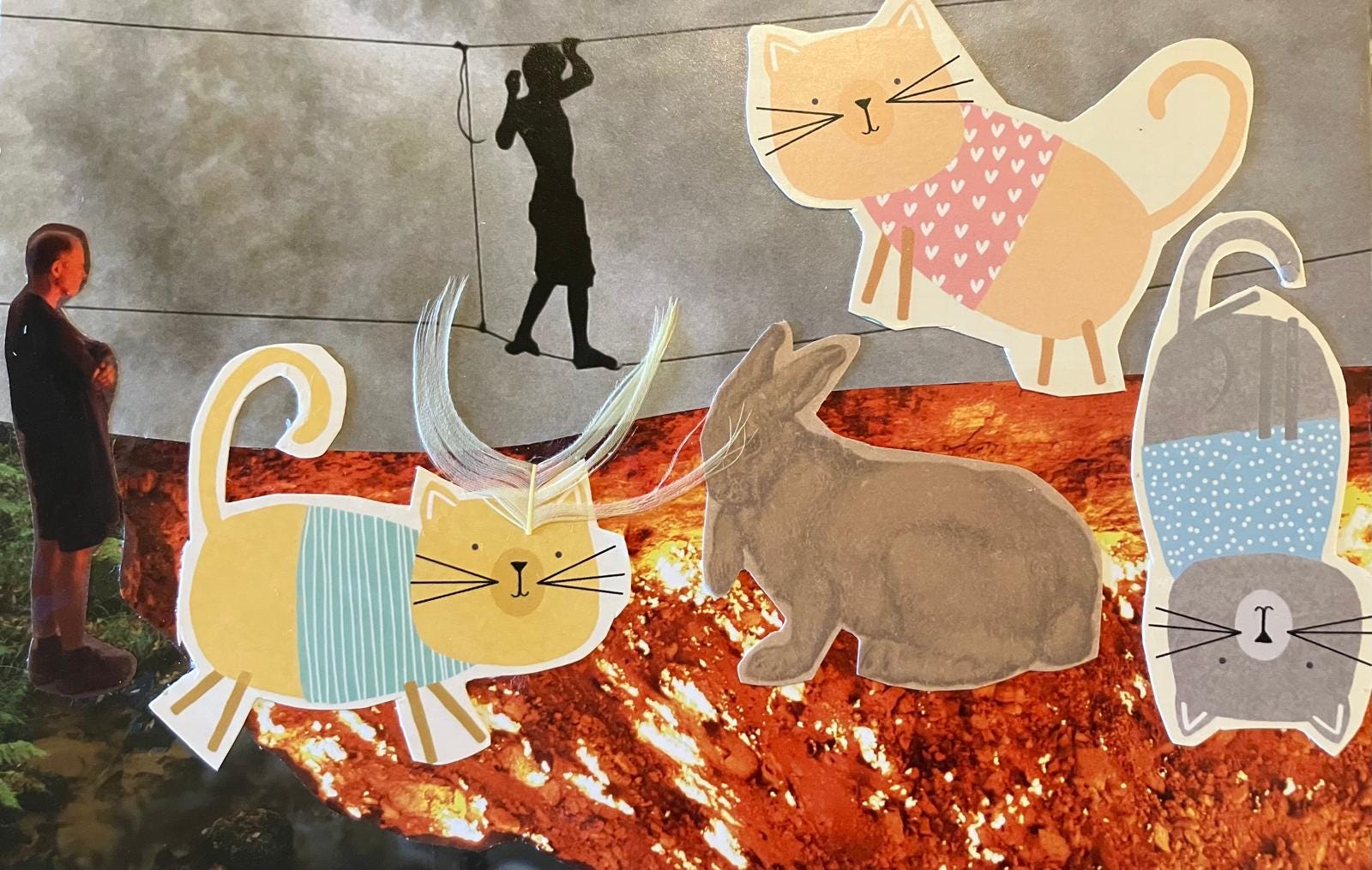
In Saturday’s post, ‘Things fall apart; the centre cannot hold’, I wrote about Step one on a twelve step recovery journey correlating with point seven on the enneagram, and you might like to begin there.
In this follow-up piece, we will again be accompanied by extracts from Yeats poem, ‘The second coming’ and by imagery from my personal SoulCollage® deck of cards. Follow this link to learn more about SoulCollage® at The Soul Shed.
If you know this place, it is likely you will feel an archetypal resonance. A hungry ghost is a being in Buddhism and chinese mythology who is driven by intense emotional needs in an animalistic way.
‘In the realm of Hungry Ghosts’ is also a book by trauma specialist Gabor Mate. He specialises on the long term effects of childhood trauma on physical and mental health, and reframes addiction, pulling it out of pathologogy and viewing it as a symptom of human suffering.
At the extreme end of this is the abuse of substances that can destroy the physical body, but there is a soul sickness that is much more subtle and pervasive that may have its hand in parts of your life. Our hungry ghosts do their worst when they have convinced us that there’s nothing to see that they can’t take care of better.
Mine was a painful relationship with someone i adored, that we couldn’t ‘make work’. I began a journey of recovery and self-remembering in my early thirties when I finally had to see what was clear to everyone who loved me. I had to find a way to surrender and let it go.
There are more than fifty fellowships serving communities of humans struggling in different areas of their lives.
There are many portals into this healing spiral.
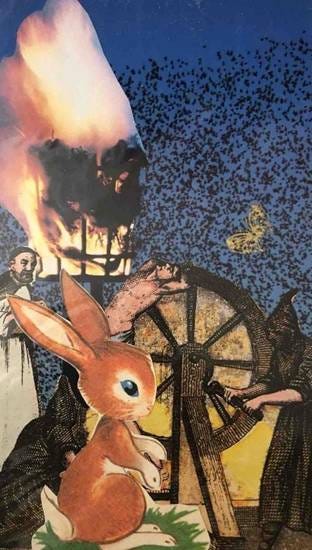
Here I will be talking about point seven as a place in the human psyche that we all pass through. You don’t need to know the enneagram well to appreciate this - it is the stuff of any good story: its a crisis point; a threshold.
The gluttony in us all at point seven on the enneagram, seen as archetypal place, can draw to itself all kinds of impressions, activities, people, things, with a kind of hoovering ingesting intensity.
The seven moment is far away from stillness or widom; it is a ring of fire in the centre of excess, distraction, and the dawning realisation that this way of living no longer works.
Step one in recovery is to realise that our lives have become unmanageable, that we are powerless over X.
Step one, far from being a moral failure, is actually a perceptual shift.
It’s the messy birthplace of an inner witness.
The darkness drops again; but now I know
That twenty centuries of stony sleep
Were vexed to nightmare by a rocking cradle.
That realisation, in the midst of whatever it is we are doing to avoid a core suffering, is a kind of portal. In the recognition of unmanageability there is a reframing of experience that names the possibility of something else, something different.
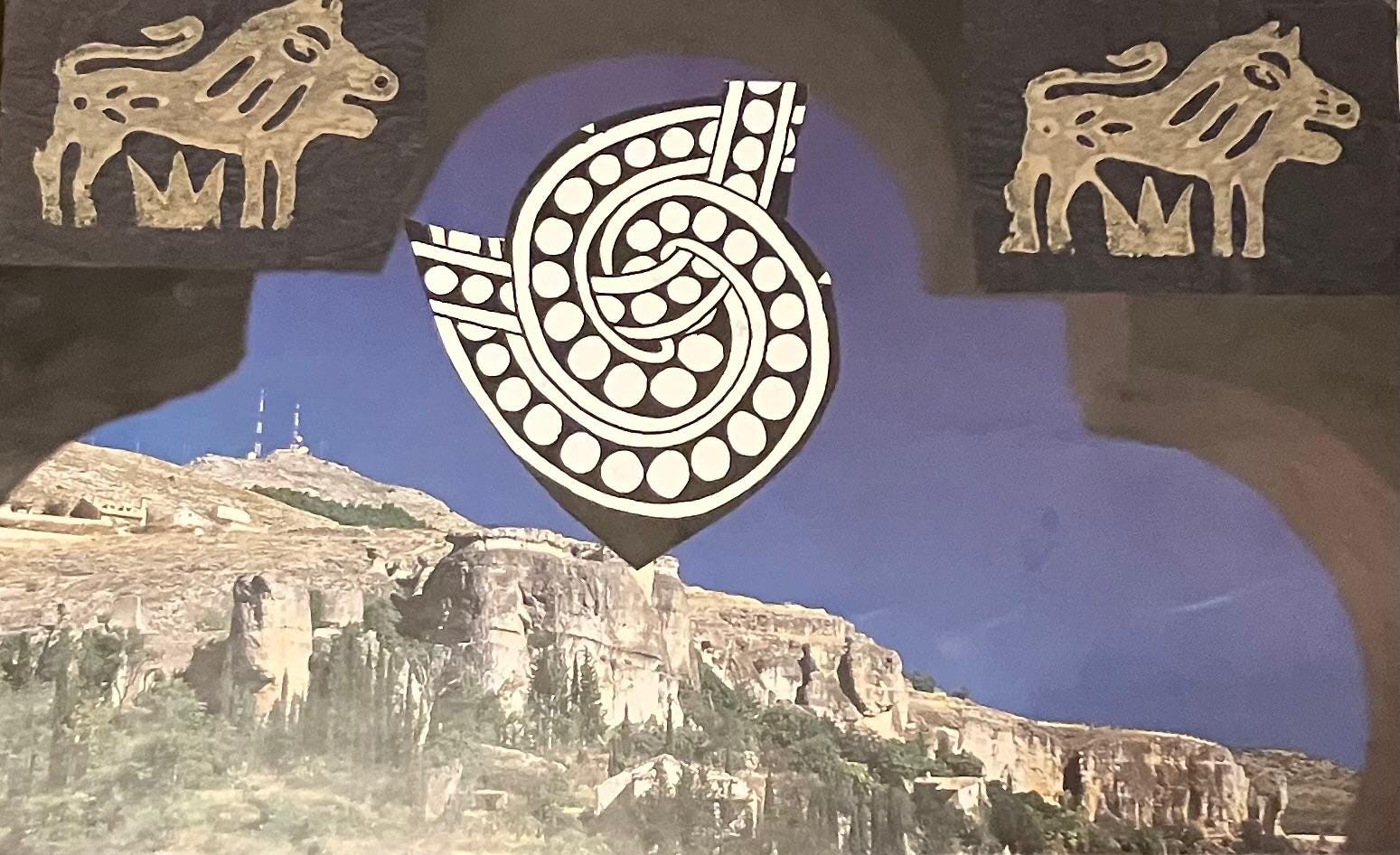
We each have a set of habits and patterns that have become an automatic, and at times compulsive, survival strategy.
Point seven on this archetypal spiral maps the place where we can interrupt all this thrashing around and own our part of the ensuing painful complexity and dissaray.
This realisation at seven is a little like being washed up on a new unknown shore.
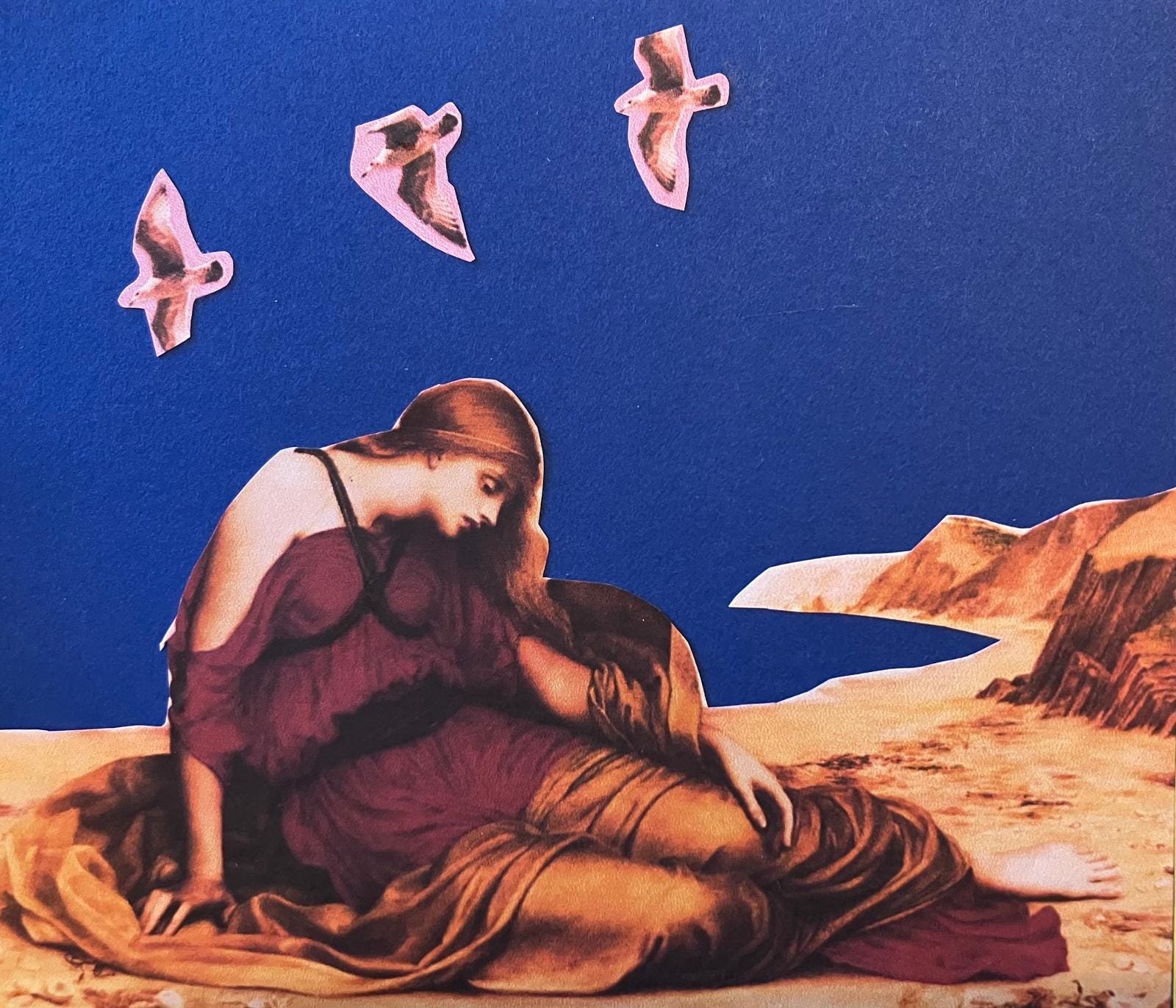
You may know and see your own survival strategy and its possibilities and pitfalls, or you may have successfully hidden it from yourself, and spend most of your time hanging out in your idealised self-image.
Realising that something has become unmanageable is a profound movement out of spinning. Out of compulsion. Out of fire-fighting. Out of trying to control something that is not your own to control.
What is yours? A shopping habit? Your consumption of the news? Your anti-aging regime? Another person’s painful behaviour?
And what rough beast, its hour come round at last,
Slouches toward Bethlehem to be born? -
W.B. Yeats - The Second Coming.
The currency here isn’t enlightenment, but radical honesty with yourself.
These vulnerabilities are a kind of achilles heel, and yet they’re also our portal to humility.
If you would like to deepen your inquiry here, have a look at the graphic of ‘Vulnerabilities in the instinctual subtypes in the footnotes. I’ll be sending it in a seperate post with some journaling prompts to paid subscribers later this week.
Each human will be having a unique experience within this archetypal healing landscape. Regardleuss of yor enneagram pattern, in this archetypal frame, all this happens at point seven. It is a repeating initiation within the psyche.
Lets now turn to the place of seven as a personality in the mental centre to make it clear why this initiation happens at this place on the enneagram.
In the mental centre, point six sits at the core, wrestling with fear, and sixes’ journey is to take courage. When fear is not faced directly, energy moves to seven. The human at seven has not escaped from fear however, but is grasping at things outside of themselves to distract themselves from fear.
The seven personality type is staying in the possibilities and affordance of the moment to do a kind of fast improvised dance to generate pleasure in any given set of circumstances. This isn’t freedom at all however, but rather flight.
The seven personality is genuinely adventurous and a lover of life. Sevens are intrepid and make things happen! This amazing gift for improvising and for keeping moving can take the undiscerning seven into all kinds of extreme situations, and yet is also what can give the upward momentum towards light, and all that is generative.
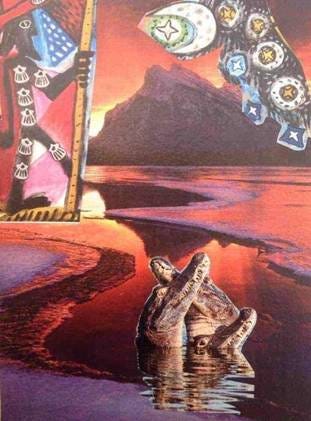
This is mirrored in seven archetypally. We do not begin an archetypal healing journey in calm and quiet, but in the thick of life and unmanageability. And the realisation that something has to give can only come as a thought – into mental space, for it to have the potential to fall into the ground of our being and take us a step closer to healing and growing.
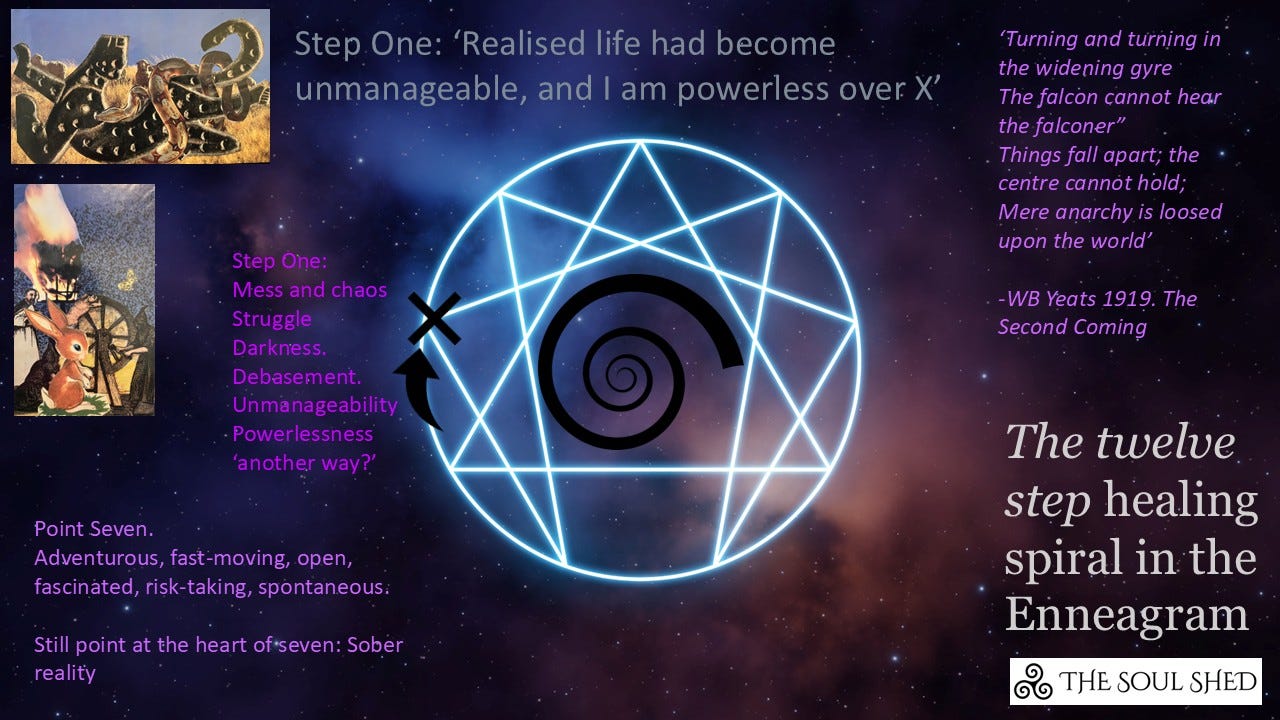
You might circle here for a long time – in Yeat’s imagery from my last post, ‘the falcon that has lost the falconer’. But now this circling is no longer mindlessly off your axis.
Now you can see yourself circling. you can now begin to name the ways you are lost.
You can’t blame the outside for it anymore. The vulture, the politician, the bad relationship, the weight-gain…
Once you have seen it and know that the unmanageability is yours, you can’t unsee it.
Step one is when we open our eyes to what we really need to see.
Step two, at point eight, will ask what the body knows about this.
See you there.
If you have enjoyed the imagery that has accompanied these two posts, join us at Unfurlings next Saturday to SoulCollage® with themes here this past month. This is free for paid subscribers and free subscribers can choose to pay an amount that feels good.
Extracts in this piece and the one that precedes it here, are from ‘The Second Coming’ , a poem written by W.B.Yeats in 1920, after world war one.